

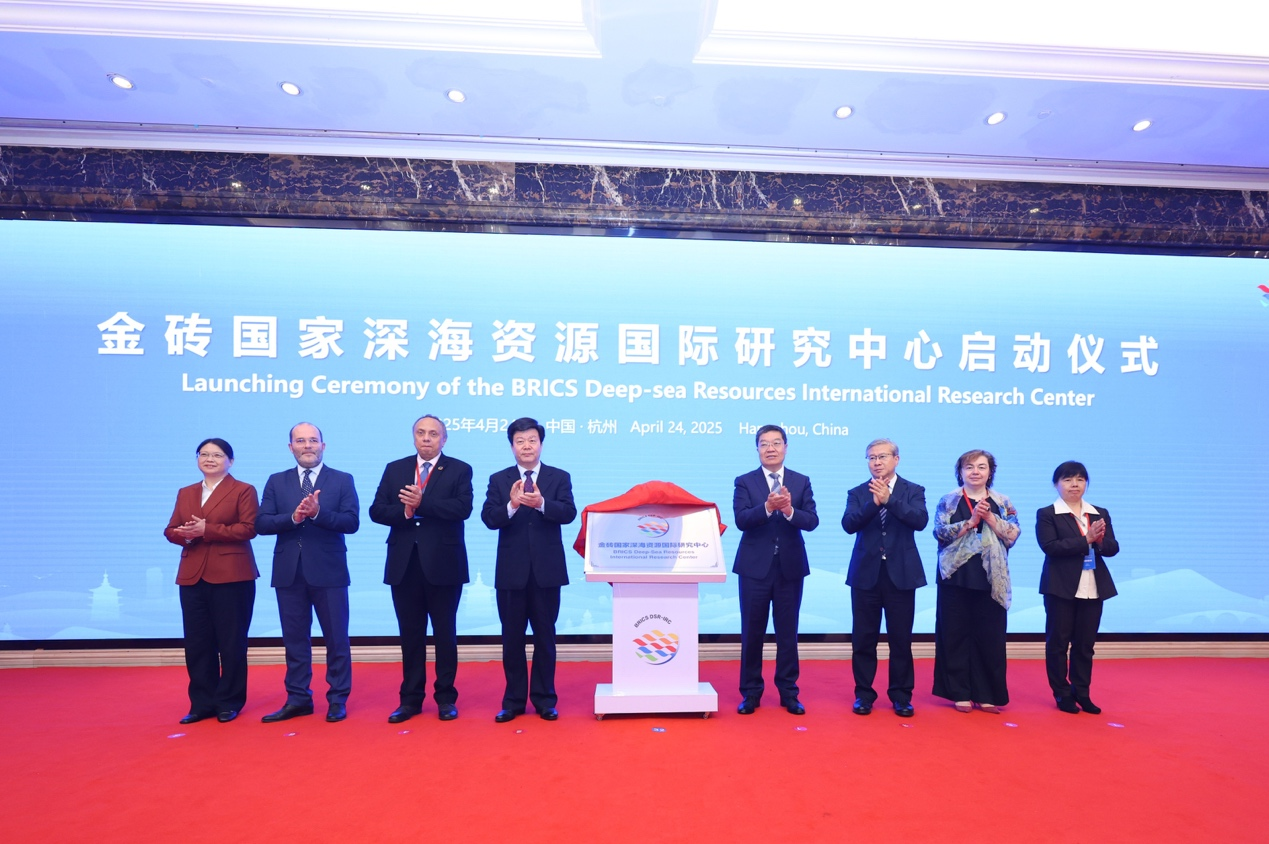
Inauguration of the BRICS Deep-Sea Resources International Research Center

Chen Jiachang, Vice Minister of the Ministry of Science and Technology, delivered remarks
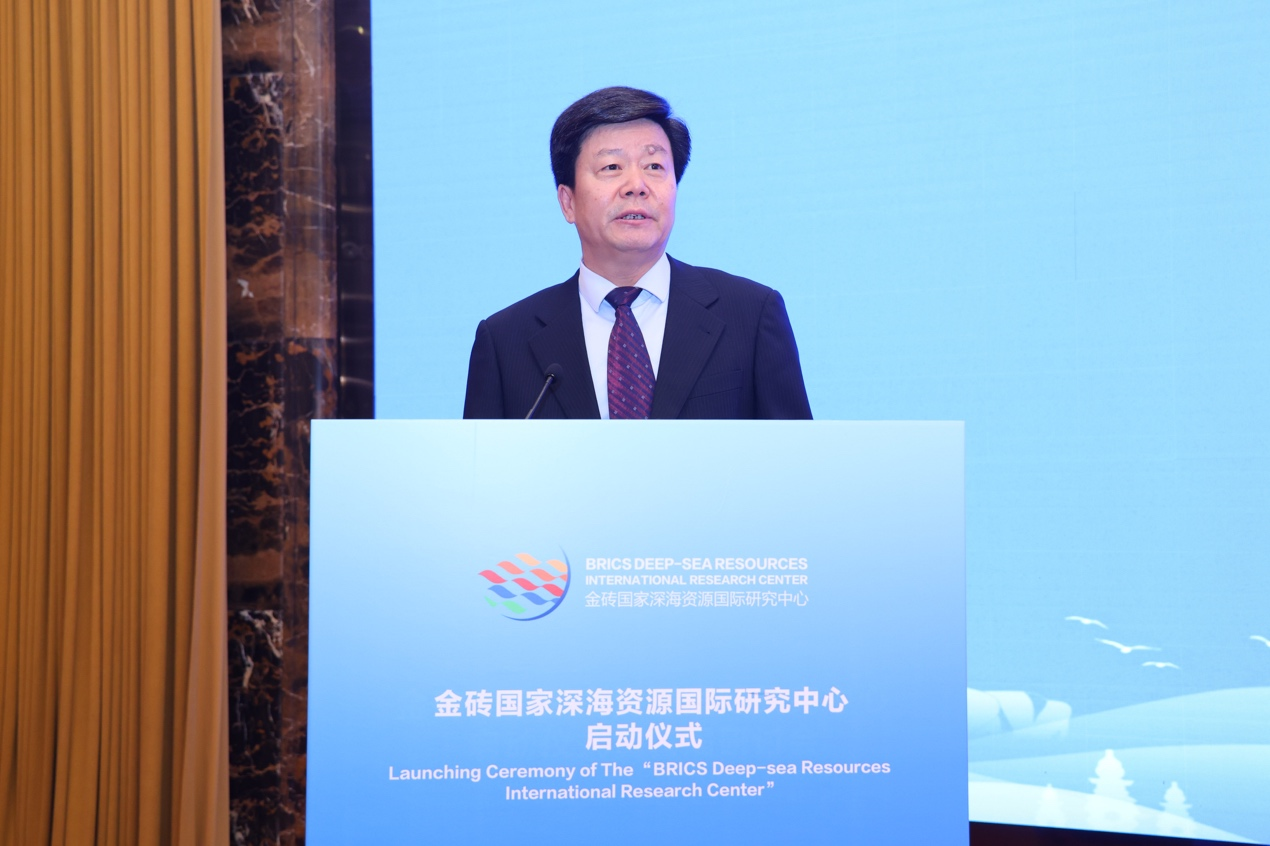
Sun Shuxian, Vice Minister of the Ministry of Natural Resources, delivered remarks
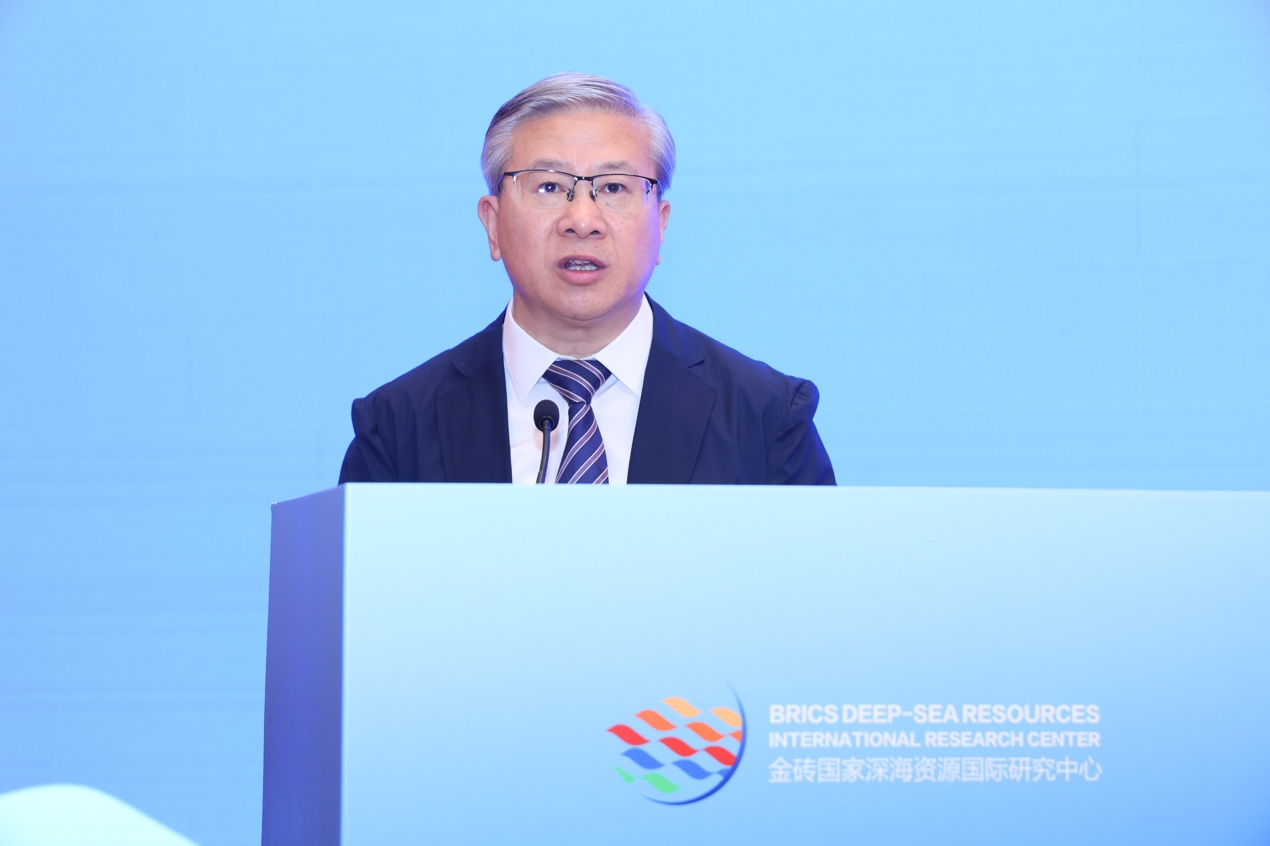
Xu Wenguang, Executive Vice Governor of the People’s Government of Zhejiang Province, delivered remarks

Amr Zakaria Hamouda, Vice Chair of the UNESCO Intergovernmental Oceanographic Commission, delivered remarks
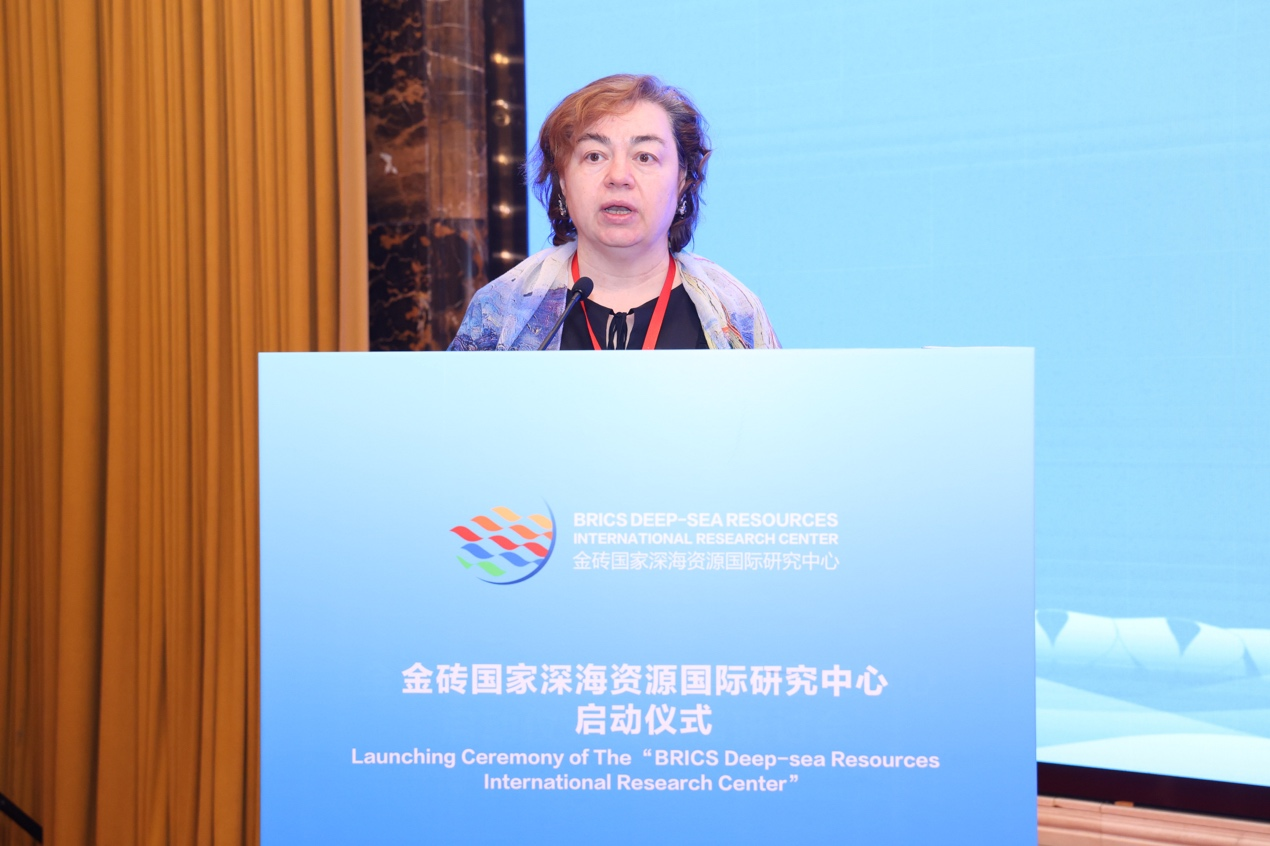
Irina Kuklina, from the International Center for Science, Technology and Educational Innovations of the Ministry of Science and Higher Education of the Russian Federation, delivered remarks
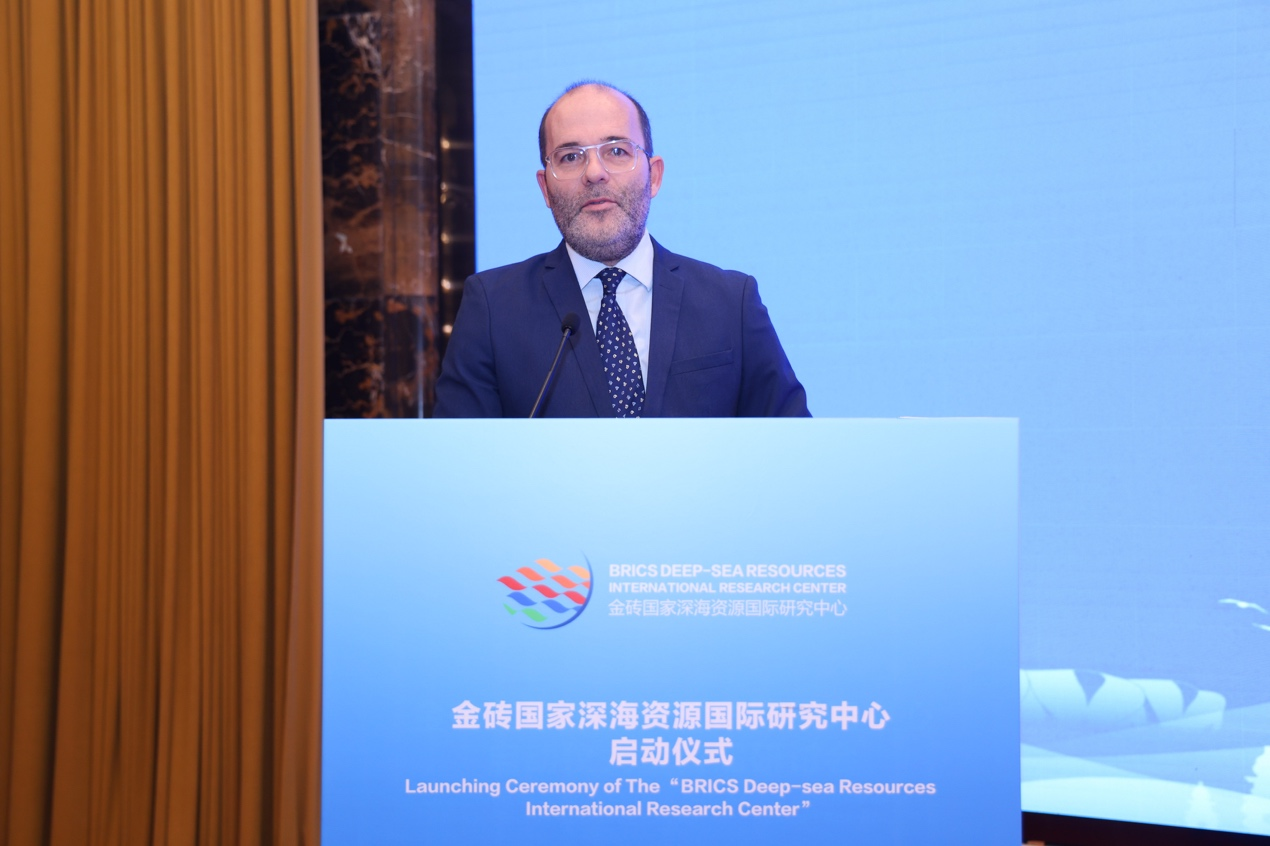
José Darío Moros, Head of Office at the International Seabed Authority, delivered remarks

Researcher Tao Chunhui presented an overview of the Center’s vision
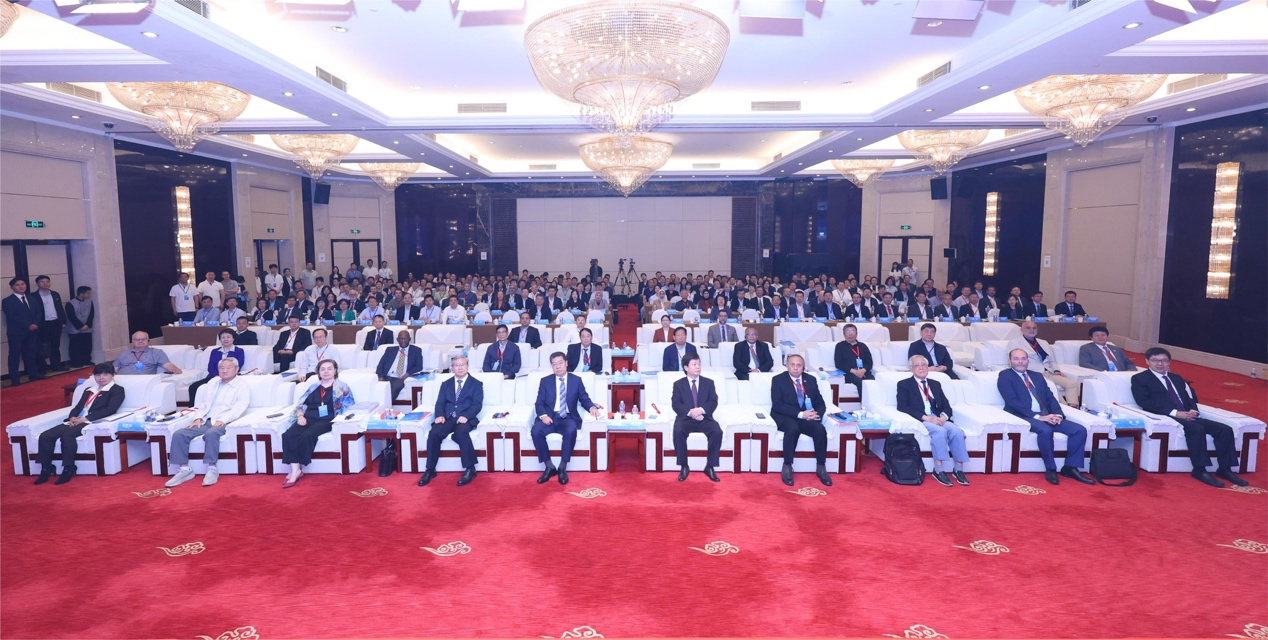
On April 24, the launching ceremony of the BRICS International Research Center for Deep-Sea Resources (hereinafter referred to as the “BRICS Deep-Sea Center”) was held in Hangzhou, Zhejiang Province. The event was attended by Chen Jiachang, Vice Minister of the Ministry of Science and Technology of China; Sun Shuxian, Vice Minister of the Ministry of Natural Resources of China; Xu Wenguang, Executive Vice Governor of Zhejiang Province; Amr Zakaria Hamouda, Vice Chair of the UNESCO Intergovernmental Oceanographic Commission; Irina Kuklina, representative of the International Center for Science, Technology and Educational Innovations of the Ministry of Science and Higher Education of the Russian Federation; José Darío Moros, Head of Office at the International Seabed Authority; among other distinguished guests. All delivered remarks at the ceremony.
At the 16th BRICS Summit in October 2024, President Xi Jinping announced China’s commitment to building an “Innovative BRICS” and becoming a pioneer in high-quality development. He also announced that China would establish the BRICS Deep-Sea Center and welcomed partners to actively participate in deepening cooperation and upgrading capacity. The establishment of this Center echoes the BRICS vision of leveraging science, technology, and innovation to promote sustainable development and address global inequalities.
Vice Minister Chen Jiachang emphasized in his remarks that marine and polar science is a key area of BRICS science and technology cooperation. The launch of the BRICS Deep-Sea Center marks a concrete step by China to advance BRICS collaboration in scientific and technological innovation. He expressed the hope that the Center would serve as a bridge connecting government, industry, academia, and research communities across BRICS countries, bringing together strengths to foster scientific research, joint cruises, data sharing, and platform development, thereby enhancing the overall capacity of BRICS deep-sea research and strengthening their voice in global ocean governance.
Vice Minister Sun Shuxian noted that China has always adhered to the principle of integrating development with conservation, strengthening deep-sea investigations, advancing deep-sea technology and equipment, and actively participating in international seabed governance. He called on BRICS countries to deepen exchanges and cooperation, jointly advance a “Community of Innovation” in deep-sea science and technology, build a “Community of Life” for deep-sea ecosystems, and expand mutually beneficial cooperation in maritime affairs—thereby enabling developing countries to play a more active role in global deep-sea governance and contributing to a more equitable and sustainable deep-sea future.
Executive Vice Governor Xu Wenguang highlighted Zhejiang Province’s strong foundation in marine economic development and technological innovation. As China’s national demonstration zone for marine economic development, Zhejiang will take the establishment of the BRICS Deep-Sea Center as an important opportunity to strengthen platform co-development, advance key technological breakthroughs, promote transformation of scientific achievements, and foster a collaborative innovation ecosystem aligned with its strategic goal of becoming a major national hub for marine science and technology.
The launch of the BRICS Deep-Sea Center marks a significant step forward in BRICS cooperation in deep-sea science and technology, addressing shared challenges such as resource scarcity, ecological protection, and equitable development. The Center will focus on priority areas including deep-sea minerals, oil and gas, cold seeps, and environmental governance. It will consolidate the scientific strengths of BRICS countries and provide strategic advice and solutions to major sustainable development issues. Through cooperative research, joint expeditions, platform co-construction, technology transfer, and capacity building, the Center aims to develop an open, shared international cooperation platform and enhance the influence of BRICS countries in global ocean governance.
Guided by the Ministry of Science and Technology, the Ministry of Natural Resources, and the National Natural Science Foundation of China, the Center is administered by the China 21st Century Agenda Management Center, with the Second Institute of Oceanography (SIO) of the Ministry of Natural Resources responsible for its construction and operation. At the ceremony, Researcher Tao Chunhui of SIO presented the Center’s vision. The meeting reached broad consensus on strengthening deep-sea collaboration under the BRICS framework, further consolidating cooperation in deep-sea science and sustainable development, and injecting new impetus into the building of an open, inclusive, and mutually beneficial deep-sea development partnership.