
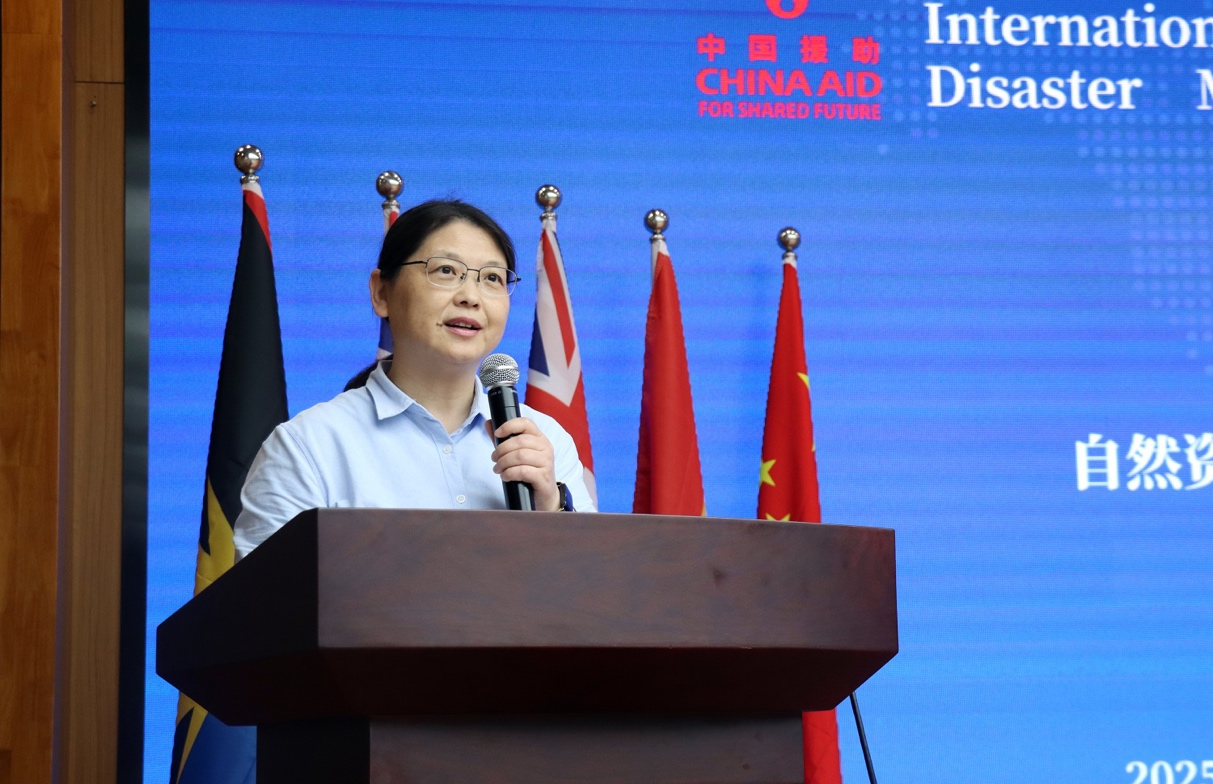
Director-General of SIO Fang Yinxia delivered a welcome address
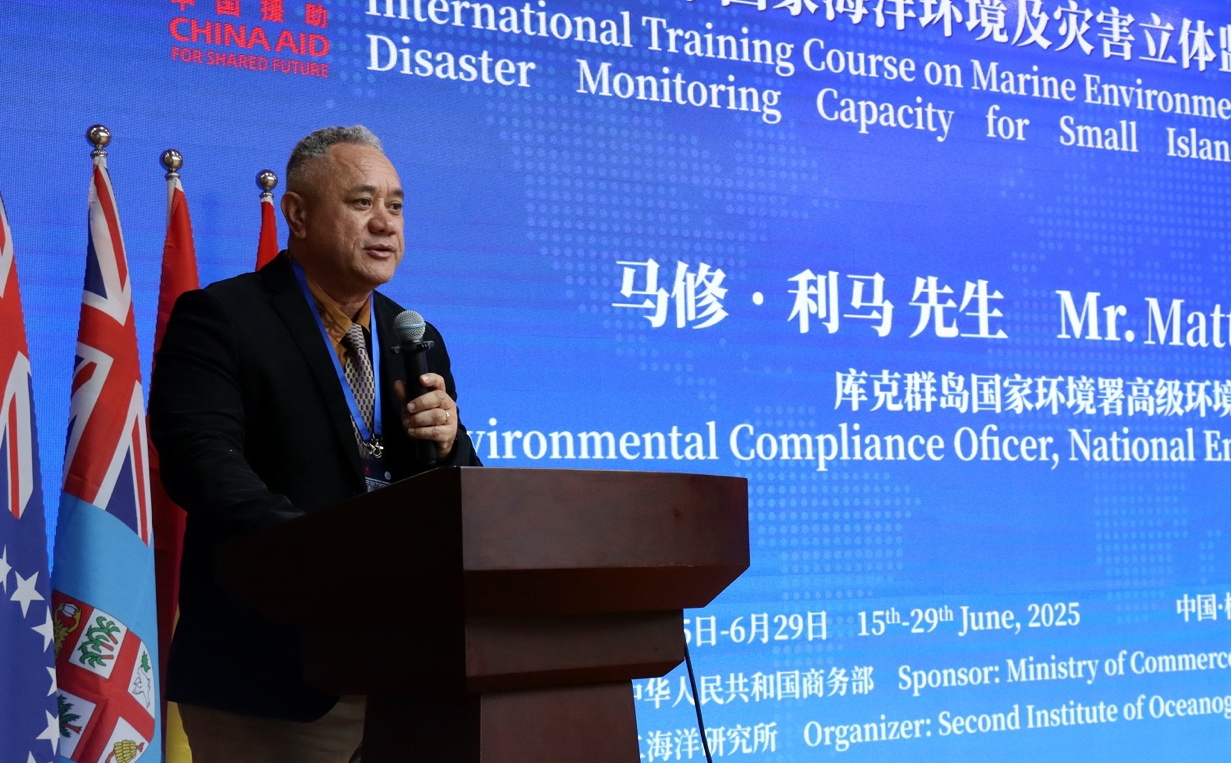
A trainee representative delivered remarks
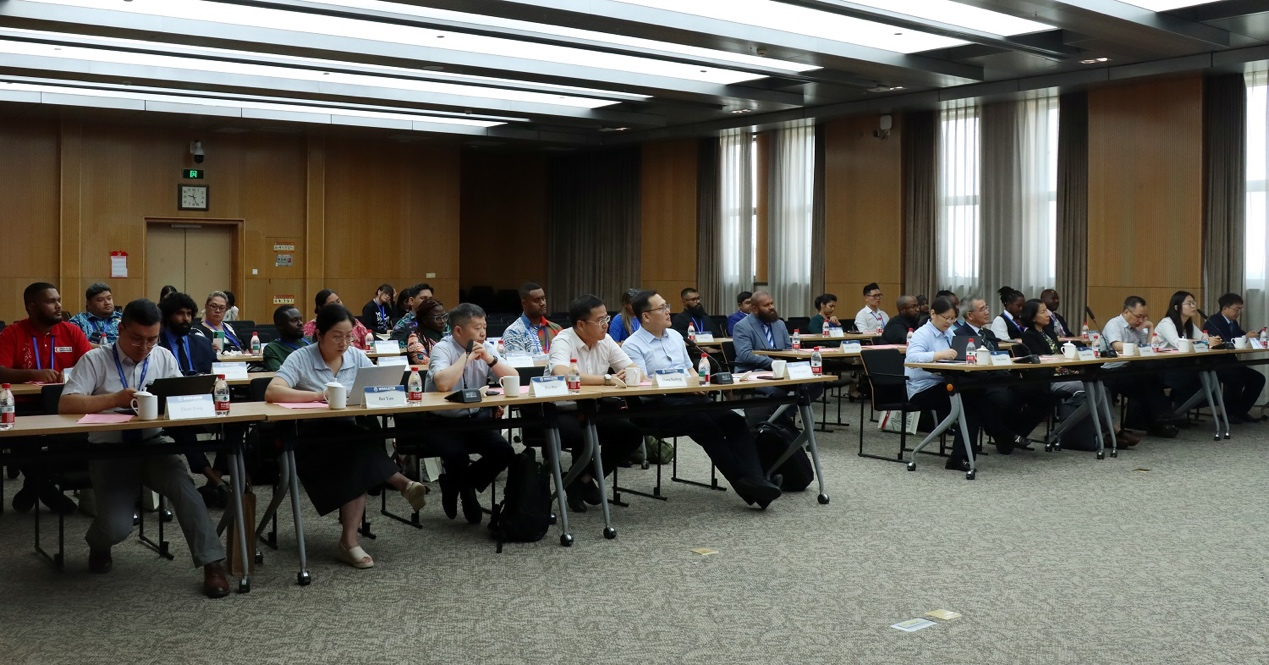
On June 16, the International Training on Marine Environment and Three-Dimensional Disasters Monitoring Capacity for Small Island Developing States (SIDS2025), sponsored by the Ministry of Commerce and organized by the Second Institute of Oceanography (SIO), Ministry of Natural Resources (MNR), was successfully held in Hangzhou. Twenty-two participants from eight countries, Antigua and Barbuda, the Cook Islands, the Maldives, Mauritius, Fiji, Samoa, and Ghana, gathered in Hangzhou to begin this learning program.
This is the first training program organized by SIO since obtaining the qualification for foreign-aid training from the Ministry of Commerce. Wang Antao, Deputy Director-General of the Department of International Cooperation of the MNR, Liang Zhiliang, Second-Level Inspector of the Zhejiang Provincial Department of Commerce, and representatives from the National Marine Environmental Forecasting Center, the Marine Island Research Center of the Ministry of Natural Resources, and the National Satellite Ocean Application Service attended the opening ceremony, together with all participants.
At the opening ceremony, Director-General Fang Yinxia delivered a welcome address, emphasizing SIO’s long-standing commitment to cooperation with island countries. She expressed the hope that this training program would enable the sharing of China’s experience and practical technologies in marine observation and monitoring, jointly advancing the “Blue Partnership,” and helping turn scientific and technological innovation into a protective shield and development engine for island states. Inspector Liang Zhiliang highlighted Zhejiang Province’s exemplary role in developing the marine economy, presenting achievements made under the provincial strategies of “Building a Strong Marine Province” and “Developing a Robust Marine Economy,” and expressing hopes for deeper cooperation with participants in marine economy and other areas to contribute to sustainable socioeconomic development.
Representatives from the Cook Islands and Ghana expressed their gratitude to the Chinese government for providing the training opportunity. They noted that small island developing states face severe challenges brought by climate change, and that this program would help significantly enhance their capabilities in marine environmental and disaster monitoring, enabling them to better respond to climate impacts and protect fragile marine ecosystems.
In the speech, Deputy Director-General Wang Antao reaffirmed China’s strong commitment to international marine cooperation, particularly with small island developing states. Looking ahead, China is willing to work with all parties to focus on four key pillars, including disaster prevention and mitigation, blue economy, scientific and technological innovation, and ecological protection, through technology sharing and capacity building to strengthen climate resilience in island countries and jointly promote sustainable development. China will continue to contribute its strengths in marine science and ecological governance, work with island states to build a “maritime community with a shared future,” and offer Chinese wisdom to global ocean governance.
During the 15-day training, experts from the Party School of the CPC Zhejiang Provincial Committee, Zhejiang Normal University, the Marine Island Research Center of the Ministry of Natural Resources, Liaocheng University, Changguang Satellite Technology Co., Ltd., and SIO delivered lectures covering a wide range of topics, including China’s national conditions, marine environmental monitoring and disaster early warning, remote sensing applications, and ecological conservation. Participants also carried out field visits to relevant institutions. Through a combination of lectures, case studies, and field practice, the program helped participants gain deeper insights into Chinese culture, master advanced marine environmental and disaster monitoring technologies, and strengthen practical skills. It also further enhanced marine cooperation between China and island countries, contributing to improved capacity in addressing climate change and ocean environmental challenges.